Enjoy!

Interested in working in reality television? Not sure what really goes into producing and delivering shows? This blog is for you.
Wednesday, September 10, 2014
IN THE TURN trailer
Enjoy!

Saturday, March 1, 2014
Vagine Regime - Web Exclusive Preview
Here is a special preview clip from my upcoming feature doc "The Vagine Regime: Queer Roller Derby." This is uncorrected and unmixed, but I think you can see we have something really special here…
Monday, September 16, 2013
7th Annual Prime Cuts panel
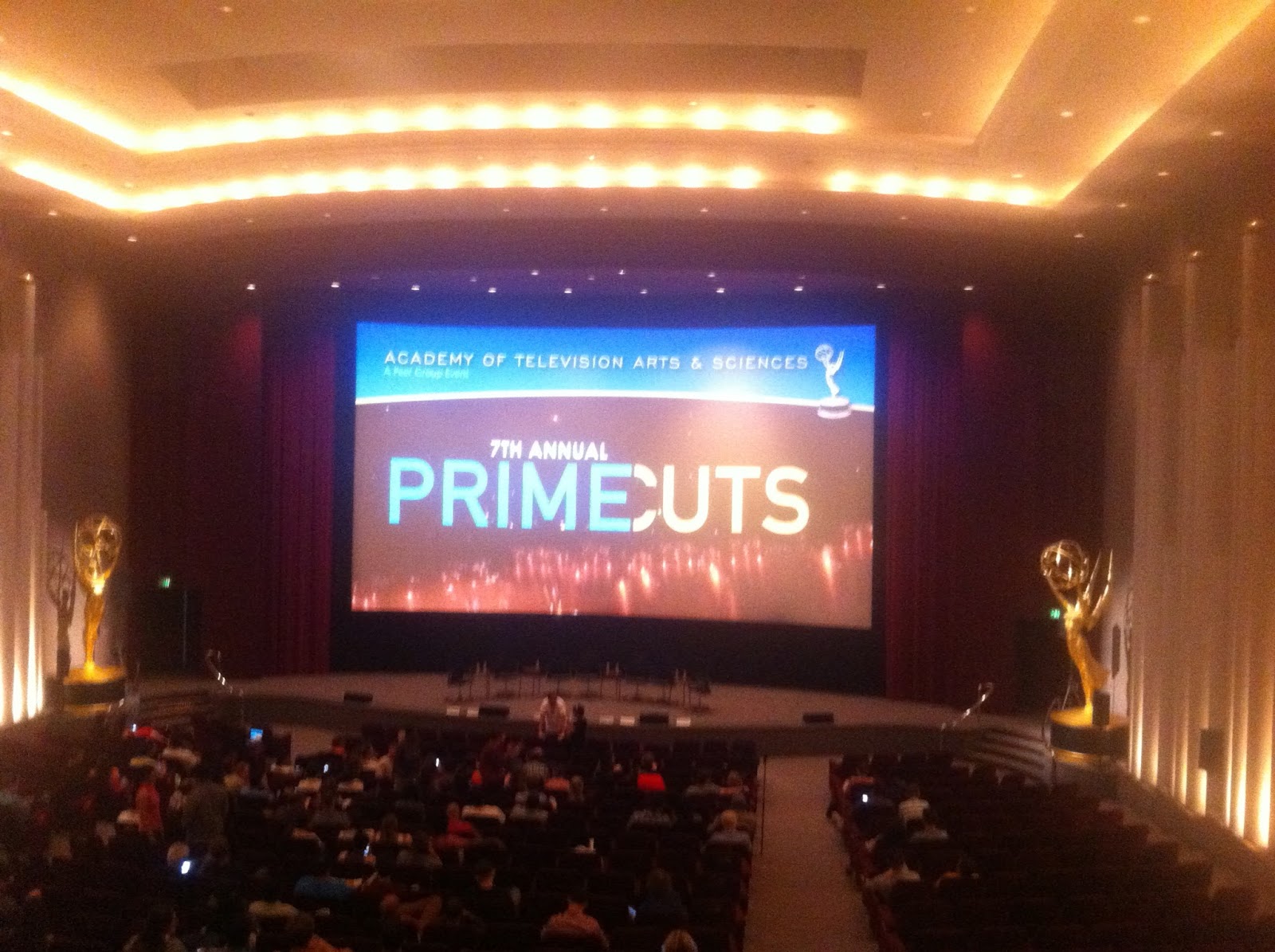
Yesterday I attended the 7th Annual Prime Cuts
panel, put on by American Cinema Editors and the Academy of Television Arts and
Sciences. The panel is made up of
currently Emmy-nominated editors discussing their craft with moderator Shawn
Ryan (creator of The Shield).
Among the panelists this year was Lisa P. Trulli, who is nominated for
editing the hit reality series “Project Runway.” Her answer to this first question was the highlight of the
entire panel for me.
SR: Let’s move
on to our next nominee, Lisa, who is nominated for Project Runway. Reading your pre-interview stuff, you
said something that I really appreciated, because a lot of times when I talk to
editors who work in the reality and competition space, they tend to have
aspirations to do movies or scripted; you talk about how much you love the
genre. Talk about why you love
editing the genre.
LISA: Well, yeah, sometimes reality gets a little bad rap,
but as an editor, it’s the most amazing place to work. You have complete control. And I literally have had shows where
they put me in a room and say, “Six weeks later, you need to come up with a
show.” And it’s really fun. It’s a great way to craft stories and
develop characters, and it’s a very broad approach. Like, I’m listening to these beautiful, nuanced things that
the feature world has—I don’t have that.
I don’t have a beautiful, crafted, composed shot. These guys are running, gunning, moving
and we’re lucky if we get anything on film. We’re racing all the time, so we cannot depend on a
beautiful visual to tell our story.
We have to use every trick in the book and I really love doing that.
Wednesday, August 14, 2013
Vagine Regime: Queer Roller Derby
Hey everybody! This site has actually been getting some decent traffic even though I haven't posted in quite some time. I hope that means you are finding useful information and I hope to make some new informative posts in the future.
One reason I haven't been as active on this site is because I've been keeping very busy with work. In addition to editing several episodes of the hit MTV series "Catfish: The TV Show," I have begun working on my very first feature! It's a lifelong dream for me to work on a feature, so this is very exciting. It's an independent documentary about an international collective of queer derby skaters known as "The Vagine Regime." Check out our first trailer:
If you like it, please help spread the word about our little film! Thanks, Dan
One reason I haven't been as active on this site is because I've been keeping very busy with work. In addition to editing several episodes of the hit MTV series "Catfish: The TV Show," I have begun working on my very first feature! It's a lifelong dream for me to work on a feature, so this is very exciting. It's an independent documentary about an international collective of queer derby skaters known as "The Vagine Regime." Check out our first trailer:
If you like it, please help spread the word about our little film! Thanks, Dan
Monday, July 2, 2012
Production Music Libraries
Where does the music come from in reality television?
Many of your favorite television music tracks come from popular libraries, such as the theme song from Curb Your Enthusiasm. And much of the music from It's Always Sunny In Philadelphia, also including their theme song.
Production music libraries are a popular source of music for television for several reasons. The chief advantage is that they are designed to be easy to license. The production company pays a flat fee to use music from a particular production library, and for that fee they are allowed to use all of that music in perpetuity, anywhere around the world that the show may be broadcast, on any platform or format even if it hasn't been invented yet. If you know anything about the nightmare of licensing music under these situations, you begin to see why using a production library is a good, no-hassle way to get music for your production.
Additionally, production music libraries are much cheaper than licensing commercial music or hiring a composer to write original music for your production. This is particularly true if your company is making several shows and can cut an overall deal with one production library.
There are many libraries available for you to investigate before deciding which one is right for your project.
My personal favorite is the Extreme Music library. This is a vast, vast library with every style and combination of styles you can imagine. I love that it has a large collection of classical music, as I tend to use it whenever I can (it's good for comedy, action, drama, everything if you know what you're looking for...) I love that they are constantly adding new stuff. The website is very easy to navigate and search for different tracks by feel or description or instrument or keyword or whatever! I've never had to struggle to find something in this library, and I always get exactly what I'm looking for after a little searching. I would use the Director's Cut series to score a film, should I ever get the chance.
The library I've worked with the most as an editor is called iSpy. This library has a lot more of what you would think of as typical reality music and I find is particularly suited for comedy and action, though it is used in all types of shows.
There are plenty of libraries out there, and here are some I have occasionally come across in my professional life:
Killer Tracks is a very popular library.
So is Vanacore
Lovecat Music has a lot of pop music with lyrics. I used it on Plain Jane for the CW.
Combustible
Signature
APM
AH2
Discovery Music Source is used by all the Discovery family of networks, such as TLC and Discovery Science.
Audionetwork is a British company that is gaining footholds in the US.
The downside to using a production library is that none of the tracks will be truly unique to your show, and there is a risk that viewers will begin to recognize or even tire of the music. I find this is generally a small risk, and one well worth taking.
EDIT:
Here are some more libraries I have worked with now, on MTV and other networks:
Beach Street Music
Black Toast Music
In The Groove
Jingle Punks
Pfilbryte - I particularly like this library for quirky and docu stuff
Pacifica
DL Music
AudioSparx - Easy licensing for independent filmmakers
Many of your favorite television music tracks come from popular libraries, such as the theme song from Curb Your Enthusiasm. And much of the music from It's Always Sunny In Philadelphia, also including their theme song.
Production music libraries are a popular source of music for television for several reasons. The chief advantage is that they are designed to be easy to license. The production company pays a flat fee to use music from a particular production library, and for that fee they are allowed to use all of that music in perpetuity, anywhere around the world that the show may be broadcast, on any platform or format even if it hasn't been invented yet. If you know anything about the nightmare of licensing music under these situations, you begin to see why using a production library is a good, no-hassle way to get music for your production.
Additionally, production music libraries are much cheaper than licensing commercial music or hiring a composer to write original music for your production. This is particularly true if your company is making several shows and can cut an overall deal with one production library.
There are many libraries available for you to investigate before deciding which one is right for your project.
My personal favorite is the Extreme Music library. This is a vast, vast library with every style and combination of styles you can imagine. I love that it has a large collection of classical music, as I tend to use it whenever I can (it's good for comedy, action, drama, everything if you know what you're looking for...) I love that they are constantly adding new stuff. The website is very easy to navigate and search for different tracks by feel or description or instrument or keyword or whatever! I've never had to struggle to find something in this library, and I always get exactly what I'm looking for after a little searching. I would use the Director's Cut series to score a film, should I ever get the chance.
The library I've worked with the most as an editor is called iSpy. This library has a lot more of what you would think of as typical reality music and I find is particularly suited for comedy and action, though it is used in all types of shows.
There are plenty of libraries out there, and here are some I have occasionally come across in my professional life:
Killer Tracks is a very popular library.
So is Vanacore
Lovecat Music has a lot of pop music with lyrics. I used it on Plain Jane for the CW.
Combustible
Signature
APM
AH2
Discovery Music Source is used by all the Discovery family of networks, such as TLC and Discovery Science.
Audionetwork is a British company that is gaining footholds in the US.
The downside to using a production library is that none of the tracks will be truly unique to your show, and there is a risk that viewers will begin to recognize or even tire of the music. I find this is generally a small risk, and one well worth taking.
EDIT:
Here are some more libraries I have worked with now, on MTV and other networks:
Beach Street Music
Black Toast Music
In The Groove
Jingle Punks
Pfilbryte - I particularly like this library for quirky and docu stuff
Pacifica
DL Music
AudioSparx - Easy licensing for independent filmmakers
Monday, June 18, 2012
Double premiere tonight!
Tonight I have two shows premiering...
"Danger By Design" has back to back episodes on Discovery Science at 9pm and 10pm...
Specifically I cut episodes five and six, which should air back to back on July 2nd.
Also tonight is the premiere of "Miss Advised" on Bravo at 10pm....
I specifically worked on episodes 4-8, which will begin airing July 9th.
Enjoy!
"Danger By Design" has back to back episodes on Discovery Science at 9pm and 10pm...
Specifically I cut episodes five and six, which should air back to back on July 2nd.
Also tonight is the premiere of "Miss Advised" on Bravo at 10pm....
I specifically worked on episodes 4-8, which will begin airing July 9th.
Enjoy!
Monday, June 4, 2012
Well it's Emmy season, and now that I'm a member of the Academy, my opinion matters for a few months. I've been receiving tons of packages for my consideration, including some pretty impressive items.


My favorite so far is the Food Network lunchbox, filled with DVDs...

The window for applications has ended already, but voting for nominations doesn't begin for another week, with the noms being announced five weeks later on July 17.
A reflection of the landscape of television these days, I've been receiving about an even split of reality and scripted programming for my consideration. For those who can't afford to mail screeners (or just want to go green), the Academy is offering online submission viewing as well. Here's what I can consider right now...


Monday, January 16, 2012
Congrats to all the nonfiction Eddie Award Nominees!
BEST EDITED DOCUMENTARY:
Cave of Forgotten Dreams
Joe Bini & Maya Hawke
Joe Bini & Maya Hawke
Freedom RidersLewis Erskine & Aljernon Tunsil
George Harrison: Living in the Material WorldDavid Tedeschi
BEST EDITED REALITY SERIES:
Anthony Bourdain – No Reservations: “Haiti”Eric Lasby
Beyond Scared Straight :”Chowchilla”Rob Goubeaux, A.C.E., Paul J. Coyne, A.C.E., Heather Abell, Audrey
Capotosta, Maura Corey, Jeremy Gantz & Molly Shock
Capotosta, Maura Corey, Jeremy Gantz & Molly Shock
Whale Wars: “Race to Save Lives”Eric Myerson, Pete Ritchie & Josh Crockett
See the full list of nominees here.
Tuesday, January 3, 2012
TV in the antenna age
While doing some holiday travel, I was pleasantly surprised by an classic television exhibit in Terminal 3 of SFO, Television in the Antenna Age. Check it out if you're there!

 Although the exhibit was almost exclusively about scripted television and technology, I was happy to find this little shout out to Reality Television...

Reality Television: Unscripted television featuring "ordinary" people dates to television's earliest years. Allen Funt, the host and producer of radio show Candid Microphone, introduced Candid Camera on the American Broadcasting Company (ABC) in 1948. The premise involved presenting unsuspecting people with unusual or alarming situations and capturing their reactions with hidden cameras. The pranks ranged from elaborate set-ups, sometimes involving the subject's friends or relatives, to simple reaction shots of pedestrians surprised by a talking mailbox, or an over-enthusiastic traffic cop. Television viewers were captivated by the actions of people with whom they identified, and the program aired for more than fifty years.


Reality Television: Unscripted television featuring "ordinary" people dates to television's earliest years. Allen Funt, the host and producer of radio show Candid Microphone, introduced Candid Camera on the American Broadcasting Company (ABC) in 1948. The premise involved presenting unsuspecting people with unusual or alarming situations and capturing their reactions with hidden cameras. The pranks ranged from elaborate set-ups, sometimes involving the subject's friends or relatives, to simple reaction shots of pedestrians surprised by a talking mailbox, or an over-enthusiastic traffic cop. Television viewers were captivated by the actions of people with whom they identified, and the program aired for more than fifty years.
Monday, December 5, 2011
What is an online editor?

It's important to understand that throughout the offline editing process, the footage that editors and story producers work from has been digitized into the editing system at a low resolution because that much high resolution footage would be prohibitive. Once a show has gone through all its rounds of network notes, it's cut to time, and everybody is happy with it, the show is considered "picture locked." This means just what it sounds like, that the picture will not be changing from here on out. At this point, the footage is "up-rezed" (there's a million ways people spell that) which means that the source material is redigitized at full resolution, using only the clips that are in the sequence. This means only exactly the footage that is actually in the show, usually with three-second "handles" on each end, just in case there are emergency issues during the online session.
During that process, an assitant editor will keep a video mixdown of the edit on one of the video layers to refer back to and make sure that all shots have remained the same as the editor intended. This video mixdown track is also provided to the online editor to inform his work.
An online editing session is incredibly expensive, largely due to the skill of the online editor himself. He is responsible for the look of the show, color timing and balancing, carefully executing blurs or resizing to address legal notes, formatting and sexifying graphics and fonts--basically anything visual about the show! Usually the online editor takes a pass at the show on his own, adjusting color and contrast and using a set of timecoded notes to create blurs when necessary. As you can see above, he is viewing the show in full HD on a high rez flatscreen and often using a waveform monitor to assist in his decisions. These careful adjustments can make a big difference in making a show feel sexier, warmer, colder, happier, sadder and on and on and on. In this case, we were working on a show that is late in its second season, so the look and feel of this show is well known territory to our online editor. Thus, his solo pass knocked out all the heavy lifting.
Once the online editor has made his pass, usually a producer from the show will watch with the online editor. For my screening, I was joining the show's Supervising Editor, Line Producer and Post Supervisor. They watch the show through, taking notes but not stopping. This helps get a feel for the overall show for the first time in HD. Then begins a very subjective notes process where individual shots are pored over and adjusted until everything is satisfactory to whoever is the highest-ranking individual in the room.
These changes are made and the show is prepped for final sound mix...
Tuesday, November 22, 2011
Young Adult at Pickford Center for Motion Picture Study

Cody herself was there for a Q&A afterward, and this is what she had to say about the influence of reality television in the film.
AUDIENCE MEMBER: "I just loved seeing Kendra and the Kardashians. How much E! do you watch when you're procrastinating?"
CODY: "I watch a lot of E! and it's wierd; I've admitted to that and gotten these hushed, horrible reactions and I'm like, 'I'm sorry, I do.' But it was really, really important to have that footage in this movie because in a way a secondary theme of this film is it's an indictment of the culture of fame and exposure."
SPOILER ALERT--CLICK BELOW TO READ MORE
Tuesday, November 8, 2011
How to Conduct a Reality TV Interview PART 1
Sitting down to conduct your first interview for a show can be a nerve-racking experience. An interview can make or break a day of shooting, so the pressure is on. In the meantime, you'll probably be wearing a different earpiece on each side, one for crew and one for cast, and at the same time talking to the interview subject herself. Needless to say, this can get overwhelming at times, so it's best to be prepared before you ever start. In this series, I will present some basic tips to help you conduct an effective reality TV interview.
TONE
You set the tone for the interview. The subject will be a mirror of whatever you are giving them, energy-wise. Know this and use this to your advantage. Generally, you want to be conversational and keep your energy up, up, up. If you start showing how tired you are from running around the last 14 hours covering the action, your subject will start showing how tired she is too. And then you're just two tired people wasting tape. Likewise, if you are nervous, they will be nervous too and the quality of their answers will lower dramatically.
Your interview should feel like you are having a lively conversation that you are extremely interested in having. Usually, you will have a few minutes while the crew sets up and lights the shot. Do not ignore your subject, use this time to get some business out of the way and get the conversation ball rolling.
BEGINNING
When I sit down with a subject I start by introducing myself of course, then chatting a little about how they are feeling, make sure they are comfortable, etc. Then, I quickly go over some interview technique, something like this...(Imagine that I am smiling and charming during this interaction)
ME: Ok, so you remember this from casting. When this interview starts, remember that the audience is never going to hear my question. So I need you to fold the question into your answer. For example, if I say, "What's your favorite color?" You say, "My favorite color is..." Got it?
THEM: Yes.
ME: Ok, what's your favorite color?
THEM: Blue.
ME: "My favorite color is..."
THEM: Oh, yeah. My favorite color is blue.
ME: Great, so just remember to keep that up during the interview. Also, I need you to use people's names as often as possible, instead of saying he or she. So if I say, "How does Johnny react to your big news?" you would not say "He reacts to my news in such and such way," you would say "Johnny reacts to my news in such and such way." Make sense?
THEM: Yes.
ME: Great. The last thing is try to always use present tense, like you're telling a joke. "Johnny walks into the bar and the bartender says..." like that.
THEM: Ok...
ME: Wonderful. Now, don't think about this stuff too hard, just answer naturally and if I need you to say anything differently, I'll direct you, ok?
THEM: Ok!
ME: Great, remember it's just tape, we can relax and do this right. Ok, tell me your name and what you do...
And your interview has begun!
Most people will forget to use present tense (that one is really hard for interview subjects) and also using names instead of pronouns. A good way to keep this on track is to frame your questions as sentences for your subject to finish.
ME: Finish this sentence, "When I first see Johnny, I'm thinking..."
That way, when your subject answers by repeating what you just said, they will already be using present tense and other characters' names instead of pronouns. Usually they will stick with it long enough to give you a good bite. But if they have a lot of trouble with the concept of present tense, just let it go. Better to have bites in past tense than no bites at all. This goes also for emotional interviews, don't get sidetracked by coaching them on language or you'll kill their emotions in the moment.
Never, ever ask yes or no questions. Ideally, every answer your subject gives should convey some feelings about something, never just information or scene set-up. Producers call this "point A to point B stuff," and usually they tell you never to bother with it. But if you've ever worked in postproduction, you know you often need that point A to point B stuff to set up a scene. The best thing to do is ask them a question that begins with set-up info and leads into their feelings.
ME: Finish this sentence, "When I hear that I have to share a bedroom with Johnny, I have to go talk to him immediately because I'm thinking..."
NOW YOU'RE INTERVIEWING, SO BACK TO TONE....
Remember to keep your energy up if you want them to keep their energy up. You can't ask them to keep throwing high energy at a wall if you're not giving it back. And a lot of bites with great content will never get used because the subject has low energy, and that makes any content instantly boring. Try to get into the character of your subject a little bit...if you're interviewing the ladies' man, it's good to have some swagger of your own. Don't be afraid to suggest funny or poignant lines.
Especially don't be afraid to converse with your subject 'off the record.' You can decide together how they should answer a question and then get the 'official' answer. Many times in the editing bay, we will use a mixture of both because the subject acts more naturally when they don't think they're 'really answering.'
Sometimes you will be interviewing subjects about serious and horrifying topics. In this case, you want to be serious as well. Remember, you set the tone. If you are talking about something sad, channel your own depression. If you want your subject's sadness to come through, you can't be mollifying or comforting them no matter how much you want to. They will feel less sad and you will ruin your interview. At the same time, you can't press too hard too fast or they won't want to continue. It's a fine line and you will hone it over time. And you can always comfort them after the camera is done rolling.
ENGAGE
Try to maintain eye contact during the interview, and let them know you are listening. Don't make the mistake of overpreparing for the interview by writing too many specific questions and limiting yourself to the answer you're expecting or hoping for going into the interview. Be open to where the conversation takes you in an interview and you will often stumble onto gold. Also follow the emotions you sense from the subject, they can take you to unexpected places. My advice is keep a small bullet list of topics that you know you need to cover in this interview. Discuss with your superior what they are expecting from this interview and make sure you keep that in mind. Without a long list of questions, you are forced to stay engaged and listen to the subject which will yield better results for you; at the same time, you have your bullet list of story points so you know you will not miss anything vital. Best of both worlds.
I realize this post is rather stream of consciousness, but that's the way it is when I'm working hard and getting ready for the holidays. Quick shout out to Donner Pass, the film whose special features I edited, was mentioned in Variety. And don't forget to check out the next episode of Gigolos on Showtime, Thursday at 11pm.
Part 2 coming soon...
TONE
You set the tone for the interview. The subject will be a mirror of whatever you are giving them, energy-wise. Know this and use this to your advantage. Generally, you want to be conversational and keep your energy up, up, up. If you start showing how tired you are from running around the last 14 hours covering the action, your subject will start showing how tired she is too. And then you're just two tired people wasting tape. Likewise, if you are nervous, they will be nervous too and the quality of their answers will lower dramatically.
Your interview should feel like you are having a lively conversation that you are extremely interested in having. Usually, you will have a few minutes while the crew sets up and lights the shot. Do not ignore your subject, use this time to get some business out of the way and get the conversation ball rolling.
BEGINNING
When I sit down with a subject I start by introducing myself of course, then chatting a little about how they are feeling, make sure they are comfortable, etc. Then, I quickly go over some interview technique, something like this...(Imagine that I am smiling and charming during this interaction)
ME: Ok, so you remember this from casting. When this interview starts, remember that the audience is never going to hear my question. So I need you to fold the question into your answer. For example, if I say, "What's your favorite color?" You say, "My favorite color is..." Got it?
THEM: Yes.
ME: Ok, what's your favorite color?
THEM: Blue.
ME: "My favorite color is..."
THEM: Oh, yeah. My favorite color is blue.
ME: Great, so just remember to keep that up during the interview. Also, I need you to use people's names as often as possible, instead of saying he or she. So if I say, "How does Johnny react to your big news?" you would not say "He reacts to my news in such and such way," you would say "Johnny reacts to my news in such and such way." Make sense?
THEM: Yes.
ME: Great. The last thing is try to always use present tense, like you're telling a joke. "Johnny walks into the bar and the bartender says..." like that.
THEM: Ok...
ME: Wonderful. Now, don't think about this stuff too hard, just answer naturally and if I need you to say anything differently, I'll direct you, ok?
THEM: Ok!
ME: Great, remember it's just tape, we can relax and do this right. Ok, tell me your name and what you do...
And your interview has begun!
Most people will forget to use present tense (that one is really hard for interview subjects) and also using names instead of pronouns. A good way to keep this on track is to frame your questions as sentences for your subject to finish.
ME: Finish this sentence, "When I first see Johnny, I'm thinking..."
That way, when your subject answers by repeating what you just said, they will already be using present tense and other characters' names instead of pronouns. Usually they will stick with it long enough to give you a good bite. But if they have a lot of trouble with the concept of present tense, just let it go. Better to have bites in past tense than no bites at all. This goes also for emotional interviews, don't get sidetracked by coaching them on language or you'll kill their emotions in the moment.
Never, ever ask yes or no questions. Ideally, every answer your subject gives should convey some feelings about something, never just information or scene set-up. Producers call this "point A to point B stuff," and usually they tell you never to bother with it. But if you've ever worked in postproduction, you know you often need that point A to point B stuff to set up a scene. The best thing to do is ask them a question that begins with set-up info and leads into their feelings.
ME: Finish this sentence, "When I hear that I have to share a bedroom with Johnny, I have to go talk to him immediately because I'm thinking..."
NOW YOU'RE INTERVIEWING, SO BACK TO TONE....
Remember to keep your energy up if you want them to keep their energy up. You can't ask them to keep throwing high energy at a wall if you're not giving it back. And a lot of bites with great content will never get used because the subject has low energy, and that makes any content instantly boring. Try to get into the character of your subject a little bit...if you're interviewing the ladies' man, it's good to have some swagger of your own. Don't be afraid to suggest funny or poignant lines.
Especially don't be afraid to converse with your subject 'off the record.' You can decide together how they should answer a question and then get the 'official' answer. Many times in the editing bay, we will use a mixture of both because the subject acts more naturally when they don't think they're 'really answering.'
Sometimes you will be interviewing subjects about serious and horrifying topics. In this case, you want to be serious as well. Remember, you set the tone. If you are talking about something sad, channel your own depression. If you want your subject's sadness to come through, you can't be mollifying or comforting them no matter how much you want to. They will feel less sad and you will ruin your interview. At the same time, you can't press too hard too fast or they won't want to continue. It's a fine line and you will hone it over time. And you can always comfort them after the camera is done rolling.
ENGAGE
Try to maintain eye contact during the interview, and let them know you are listening. Don't make the mistake of overpreparing for the interview by writing too many specific questions and limiting yourself to the answer you're expecting or hoping for going into the interview. Be open to where the conversation takes you in an interview and you will often stumble onto gold. Also follow the emotions you sense from the subject, they can take you to unexpected places. My advice is keep a small bullet list of topics that you know you need to cover in this interview. Discuss with your superior what they are expecting from this interview and make sure you keep that in mind. Without a long list of questions, you are forced to stay engaged and listen to the subject which will yield better results for you; at the same time, you have your bullet list of story points so you know you will not miss anything vital. Best of both worlds.
I realize this post is rather stream of consciousness, but that's the way it is when I'm working hard and getting ready for the holidays. Quick shout out to Donner Pass, the film whose special features I edited, was mentioned in Variety. And don't forget to check out the next episode of Gigolos on Showtime, Thursday at 11pm.
Part 2 coming soon...
Monday, October 3, 2011
THE PERFECT STRINGOUT by Steven Friedland
“The Perfect Stringout”
A blog by Steven Friedland
So, what is a stringout? Simply put, a stringout is a sequence of shots that a Story Producer assembles and gives to an Editor to serve two purposes; 1) to give the Editor a “head start” on getting through the raw material that has been shot, and, 2) to give the Editor a “road map” on what the story of a specific scene should be. Very often, the raw material of a reality show is random and unfocused, and decisions need to be made early on as to what the focus of scene should be. The Story Producer will look at all the material for an episode and, together with the Supervising Story Producer/Co-Executive Producer, create a story arc of the episode. The Story Producer will then sort through the raw footage and start creating sequences from the raw material that reinforce the central story arc to the episode.
Just so you know, I am writing this blog from the point of view of an Editor talking to a Story Producer. Every production company handles story and stringouts in different fashions. Often, a Story Producer will have to submit their stringouts to a Supervising Story Producer and get notes on them before an Editor ever sees them. Other production companies prefer the Editor to watch ALL the raw and it is the job of the Story Producer to only pull interview bites for the Editor. There are no “hard and fast rules” to the stringout, so if you are called upon to create one, use your best judgement. And know, a stringout should be treated as an expression of your creativity.
So, what goes into “the perfect stringout”? Well, that can be a bit tricky. As an Editor, I prefer my stringouts to include any, and all, footage that could possibly be included in the final sequence, but at the same time, I prefer only “the best of the best”. That would include all the best moments of reality, the best b-roll, interview bites and insert shots. But only “the best of the best” – meaning, use your taste and select the best takes of interview bites (especially if there are multiple takes), and the moments that best express the story in the MOST CONCISE WAY. Be selective. Analyze performance and nuance. Look for reaction shots that are provocative and telling. This is YOUR opportunity to express your storytelling skills, so be brave and assert yourself. But also, you don’t want to overwhelm the editor with options, otherwise the editor could just look at the raw material on their own. Your stringout DOES NOT need to be an edit. It is simply a series of shots in a timeline. Don’t feel you need to make it look like an edited sequence ready for television. And DON’T ADD MUSIC TO YOUR STRINGOUT - !! it is a waste of your time.
On average, a “scene” in a typical show runs between 2-3 minutes in length. The raw material for a scene could be 1-2 hours in length, possibly even longer. So, I don’t think a stringout in the 15-25 minute range is outrageous. Of course, it needs to be the right 15-25 minutes of material. If a conversation goes off on multiple threads/tangents, select the most pertainent conversation/s to the story. Include any conversation that you feel is pertinent to the story/theme of the episode, but DO NOT INCLUDE every conversation. Make choices. Also, make sure you include ALL entrances and exits of major characters, and any greetings and goodbyes of major characters. Though, it will ultimately be up to the editor on whether these will be included, it can be a chore to have to scour through the footage to find these moments.
But most importantly, a stringout is the foundation for a scene; the basis for what the story of the scene will ultimately be. It will go through multiple renditions before it makes it way to the television screen or the cutting room floor. It can be and should be used as a tool to start conversations on what is the story of a scene. Above all, any stringout that is prepared with insight and consideration, I consider to be a perfect stringout.
Thursday, September 29, 2011
This means WAR!

For more info on wide area releases, I contacted a friend who works as legal consult to reality productions, and she had this to say:
In public places they cover people passing by in the background. If people are focused on or lingering in the background they need to be individually released. For audiences, they generally cover everybody although we still try to individually clear people we focus on for long periods of time and definitely for anybody with whom we interact. For employees, or others that don't have a choice to leave the area, they in general need to be released.
Wednesday, September 28, 2011
Stanford Film School
 |
| See, the sad thing about a guy like you is, in 50 years you're gonna start doin' some thinkin' on your own and you're going to come up with the fact that there are two certainties in life: one, don't do that, and two, you dropped 150 grand on a fuckin' education you could have got for a dollar fifty in late charges at the public library! |
New Challenges for Documentary: Second Edition by Alan Rosenthal
Introduction to Documentary: Second Edition by Bill Nichols
Directing the Documentary: Fifth Edition by Michael Rabiger
Documentary Storytelling: Creative Nonfiction on Screen: Third Edition by Sheila Curran Bernard

Tuesday, September 27, 2011
How to Shoot a Phone Conversation
Shooting a phone conversation for reality television is an art unto itself. It's not enough to just point the camera, we need options in the editing bay. More often than not, a phone call will last long enough to get plenty of different angles for us to play with, but even short calls will need to be edited down. So, if you don't get enough time to grab different angles during the actual call, have your subject listen or pretend to still be on the call for a couple minutes afterward while you shoot different cutaway angles. Here are some examples:
 This is your basic master shot of a subject talking on the phone. This shot and maybe a little tighter medium close up are usually what you see in post from an average field producer. A GREAT field producer will take the time to make sure we have other angles to cover this conversation, understanding that we will need to edit this phone call down and spice it up.
So, a helpful shot might be a super wide...
 I'd probably begin and end a scene with this shot and use the closer shots for the more emotional parts of the call. This is also not a bad shot for covering bites. It can also be very effective if the overall feeling of the scene needs to convey a character's loneliness. Ask your subject to answer and hang up the phone in this shot, if you're shooting it as a pickup. Here's another:

 This is what we call "talking hands." It's a close up of your subject's free hand, gesturing as if he is talking. Based on whatever the phone call was, you might have your subject make angry gestures, happy gestures, explainy gestures, etc.
Especially if the scene was emotional, you may get a super close pickup shot like this:
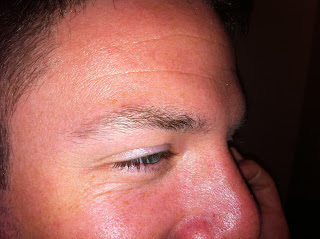 Just the eyes, again make sure to get a few different reactions. And shoot them talking AND listening.
If your subject was talking on speakerphone instead of holding the phone up to his ear, make sure to get a cutaway of just the phone. Like this:

These different shots and cutaways only take a few minutes and can make A HUGE DIFFERENCE between a boring, static phone conversation and an exciting piece of television magic. It also gives the editor freedom to construct the most effective phone conversation to serve the story.

So, a helpful shot might be a super wide...


This is an extremely helpful shot for editing a conversation. Why? Because I can't see his mouth. I can cover any part of the conversation with this shot. If you're shooting this as a pickup after the actual phone call, make sure to have your subject listen AND talk in this shot. Even though I can't see his mouth move, I can still tell whether or not he's talking based on cheek and jaw movement.
Here's a great cutaway:

Especially if the scene was emotional, you may get a super close pickup shot like this:

If your subject was talking on speakerphone instead of holding the phone up to his ear, make sure to get a cutaway of just the phone. Like this:

Monday, September 26, 2011
hello again
Sorry for my absence on this blog the last few weeks. Besides for my day job, I have been spending nights cutting the DVD special features for the upcoming horror/thriller Donner Pass. Look for it in January 2012!
Thursday, September 8, 2011
Standard Appearance Release
Bringing up the rear of this release parade is the most important of all, the appearance release. This gives you permission to use a person's likeness and voice in your show and you should try to never shoot anyone who hasn't already signed one of these. Anyone who's face appears onscreen must sign an appearance release or they will have to be blurred, including random people walking by in the background. Also worth noting is that subjects MUST BE SOBER when signing the release for it to be valid, or else they can sue you even if you have the release.
Usually during a shoot on the street, PA's help wrangle folks away from the camera, or intercept the ones who already walked through a shot to get them to sign a release. So, an average show has hundreds of appearance releases, especially if there are scenes that take place in public, at a club, etc. They need to be kept track of for a clearance coordinator to watch the cut and make sure everyone is released. Best thing to do is write a large bold number on the back of every release beforehand, starting with 001 and going up from there. After each person signs their release, have them hold up the side that has the number on it and take a digital picture of them. This way, the number can be matched to the release and thus the release can be matched to the person in the footage. If you have an iPad, there is an app for this so people can sign on the screen and you can just take a picture with the iPad's camera.
Here is a standard appearance release:

Tuesday, September 6, 2011
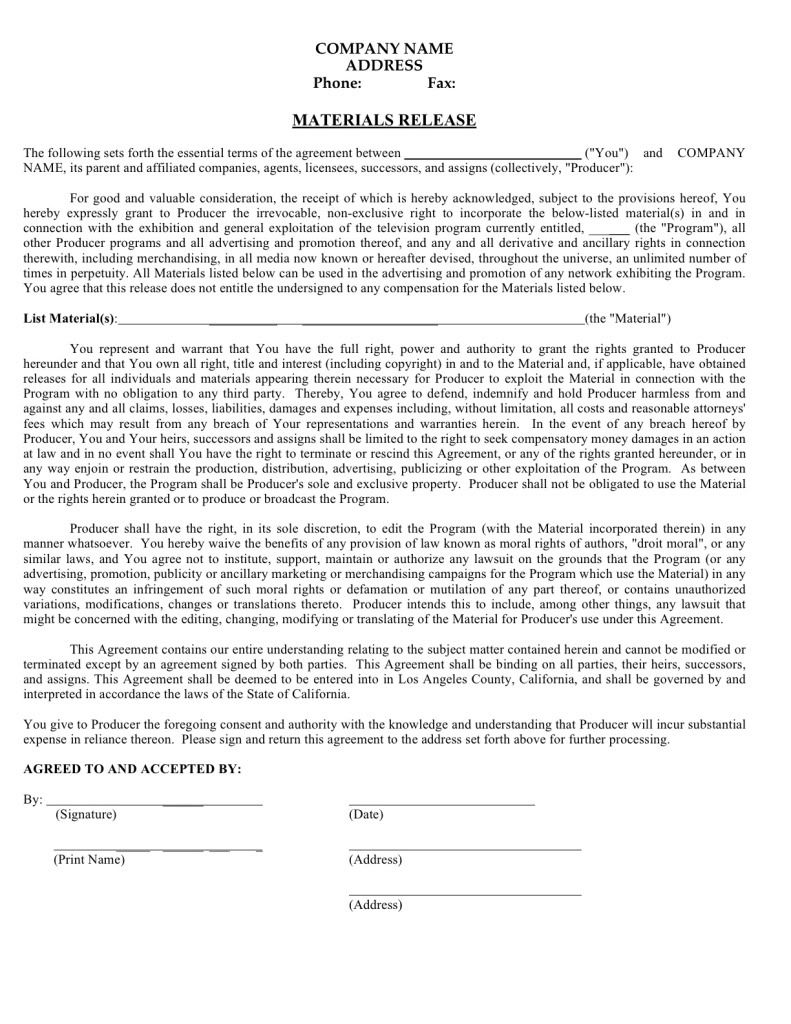
Standard Materials Release
Much like locations, photos and visual elements you wish to use in your show must be released before airing. This would include artwork in the background, maps, archival photos, album and magazine covers, etc. And it especially goes for any photos you want to use full frame or things like Billboard music charts that you often see on shows.
If you don't have permission to use these images and you can't cut around them, you will have to blur them in post. This can be a nightmare if, say, your characters are having an important conversation while standing in front of a decorative poster. A good field producer will remove any troublesome decorations from a location before shooting there, and a great producer will even clear images through Getty or another image library and decorate locations with already cleared images.
In the case of any artwork, this must be signed by the creator or rights holder, regardless of who currently owns the physical piece.
Here is a standard materials release:
 Click here to download Materials Release as a word doc
If you don't have permission to use these images and you can't cut around them, you will have to blur them in post. This can be a nightmare if, say, your characters are having an important conversation while standing in front of a decorative poster. A good field producer will remove any troublesome decorations from a location before shooting there, and a great producer will even clear images through Getty or another image library and decorate locations with already cleared images.
In the case of any artwork, this must be signed by the creator or rights holder, regardless of who currently owns the physical piece.
Here is a standard materials release:
Sunday, September 4, 2011
SUNDAY QUICK TIP
When interviewing a subject about multiple episodes, it's good to slate the different portions of the interview. Hold up a sheet of paper with the episode number written on it in large, bold letters and hold it there for at least ten seconds. This way, story producers can find the relevant portions of the interview simply by scrubbing through the footage. This is especially helpful on pickup interviews with tight deadlines, when they can't wait for transcriptions or watching the entire tapes down.
Subscribe to:
Posts (Atom)