Hey everybody! This site has actually been getting some decent traffic even though I haven't posted in quite some time. I hope that means you are finding useful information and I hope to make some new informative posts in the future.
One reason I haven't been as active on this site is because I've been keeping very busy with work. In addition to editing several episodes of the hit MTV series "Catfish: The TV Show," I have begun working on my very first feature! It's a lifelong dream for me to work on a feature, so this is very exciting. It's an independent documentary about an international collective of queer derby skaters known as "The Vagine Regime." Check out our first trailer:
If you like it, please help spread the word about our little film!
Thanks,
Dan

Interested in working in reality television? Not sure what really goes into producing and delivering shows? This blog is for you.
Showing posts with label editing. Show all posts
Showing posts with label editing. Show all posts
Wednesday, August 14, 2013

Monday, January 16, 2012
Congrats to all the nonfiction Eddie Award Nominees!
BEST EDITED DOCUMENTARY:
Cave of Forgotten Dreams
Joe Bini & Maya Hawke
Joe Bini & Maya Hawke
Freedom RidersLewis Erskine & Aljernon Tunsil
George Harrison: Living in the Material WorldDavid Tedeschi
BEST EDITED REALITY SERIES:
Anthony Bourdain – No Reservations: “Haiti”Eric Lasby
Beyond Scared Straight :”Chowchilla”Rob Goubeaux, A.C.E., Paul J. Coyne, A.C.E., Heather Abell, Audrey
Capotosta, Maura Corey, Jeremy Gantz & Molly Shock
Capotosta, Maura Corey, Jeremy Gantz & Molly Shock
Whale Wars: “Race to Save Lives”Eric Myerson, Pete Ritchie & Josh Crockett
See the full list of nominees here.
Monday, December 5, 2011
What is an online editor?

It's important to understand that throughout the offline editing process, the footage that editors and story producers work from has been digitized into the editing system at a low resolution because that much high resolution footage would be prohibitive. Once a show has gone through all its rounds of network notes, it's cut to time, and everybody is happy with it, the show is considered "picture locked." This means just what it sounds like, that the picture will not be changing from here on out. At this point, the footage is "up-rezed" (there's a million ways people spell that) which means that the source material is redigitized at full resolution, using only the clips that are in the sequence. This means only exactly the footage that is actually in the show, usually with three-second "handles" on each end, just in case there are emergency issues during the online session.
During that process, an assitant editor will keep a video mixdown of the edit on one of the video layers to refer back to and make sure that all shots have remained the same as the editor intended. This video mixdown track is also provided to the online editor to inform his work.
An online editing session is incredibly expensive, largely due to the skill of the online editor himself. He is responsible for the look of the show, color timing and balancing, carefully executing blurs or resizing to address legal notes, formatting and sexifying graphics and fonts--basically anything visual about the show! Usually the online editor takes a pass at the show on his own, adjusting color and contrast and using a set of timecoded notes to create blurs when necessary. As you can see above, he is viewing the show in full HD on a high rez flatscreen and often using a waveform monitor to assist in his decisions. These careful adjustments can make a big difference in making a show feel sexier, warmer, colder, happier, sadder and on and on and on. In this case, we were working on a show that is late in its second season, so the look and feel of this show is well known territory to our online editor. Thus, his solo pass knocked out all the heavy lifting.
Once the online editor has made his pass, usually a producer from the show will watch with the online editor. For my screening, I was joining the show's Supervising Editor, Line Producer and Post Supervisor. They watch the show through, taking notes but not stopping. This helps get a feel for the overall show for the first time in HD. Then begins a very subjective notes process where individual shots are pored over and adjusted until everything is satisfactory to whoever is the highest-ranking individual in the room.
These changes are made and the show is prepped for final sound mix...
Monday, October 3, 2011
THE PERFECT STRINGOUT by Steven Friedland
“The Perfect Stringout”
A blog by Steven Friedland
So, what is a stringout? Simply put, a stringout is a sequence of shots that a Story Producer assembles and gives to an Editor to serve two purposes; 1) to give the Editor a “head start” on getting through the raw material that has been shot, and, 2) to give the Editor a “road map” on what the story of a specific scene should be. Very often, the raw material of a reality show is random and unfocused, and decisions need to be made early on as to what the focus of scene should be. The Story Producer will look at all the material for an episode and, together with the Supervising Story Producer/Co-Executive Producer, create a story arc of the episode. The Story Producer will then sort through the raw footage and start creating sequences from the raw material that reinforce the central story arc to the episode.
Just so you know, I am writing this blog from the point of view of an Editor talking to a Story Producer. Every production company handles story and stringouts in different fashions. Often, a Story Producer will have to submit their stringouts to a Supervising Story Producer and get notes on them before an Editor ever sees them. Other production companies prefer the Editor to watch ALL the raw and it is the job of the Story Producer to only pull interview bites for the Editor. There are no “hard and fast rules” to the stringout, so if you are called upon to create one, use your best judgement. And know, a stringout should be treated as an expression of your creativity.
So, what goes into “the perfect stringout”? Well, that can be a bit tricky. As an Editor, I prefer my stringouts to include any, and all, footage that could possibly be included in the final sequence, but at the same time, I prefer only “the best of the best”. That would include all the best moments of reality, the best b-roll, interview bites and insert shots. But only “the best of the best” – meaning, use your taste and select the best takes of interview bites (especially if there are multiple takes), and the moments that best express the story in the MOST CONCISE WAY. Be selective. Analyze performance and nuance. Look for reaction shots that are provocative and telling. This is YOUR opportunity to express your storytelling skills, so be brave and assert yourself. But also, you don’t want to overwhelm the editor with options, otherwise the editor could just look at the raw material on their own. Your stringout DOES NOT need to be an edit. It is simply a series of shots in a timeline. Don’t feel you need to make it look like an edited sequence ready for television. And DON’T ADD MUSIC TO YOUR STRINGOUT - !! it is a waste of your time.
On average, a “scene” in a typical show runs between 2-3 minutes in length. The raw material for a scene could be 1-2 hours in length, possibly even longer. So, I don’t think a stringout in the 15-25 minute range is outrageous. Of course, it needs to be the right 15-25 minutes of material. If a conversation goes off on multiple threads/tangents, select the most pertainent conversation/s to the story. Include any conversation that you feel is pertinent to the story/theme of the episode, but DO NOT INCLUDE every conversation. Make choices. Also, make sure you include ALL entrances and exits of major characters, and any greetings and goodbyes of major characters. Though, it will ultimately be up to the editor on whether these will be included, it can be a chore to have to scour through the footage to find these moments.
But most importantly, a stringout is the foundation for a scene; the basis for what the story of the scene will ultimately be. It will go through multiple renditions before it makes it way to the television screen or the cutting room floor. It can be and should be used as a tool to start conversations on what is the story of a scene. Above all, any stringout that is prepared with insight and consideration, I consider to be a perfect stringout.
Thursday, September 1, 2011
"In scripted television, it is easier to pick an angle, since they shoot coverage for everything. But, in our case, we don't have cutaways. If a contestant says something brilliant, but it takes two minutes and I have to cut that down, I don't have a cutaway. I have to steal a cutaway by going over to a dancer, or something along those lines. This type of work is hard to do because you have no coverage and no script. So we are always making something from scratch."--Pamela Malouf, Dancing With the Stars editor in the Sept/Oct 2011 issue of Editors Guild Magazine
Tuesday, August 30, 2011
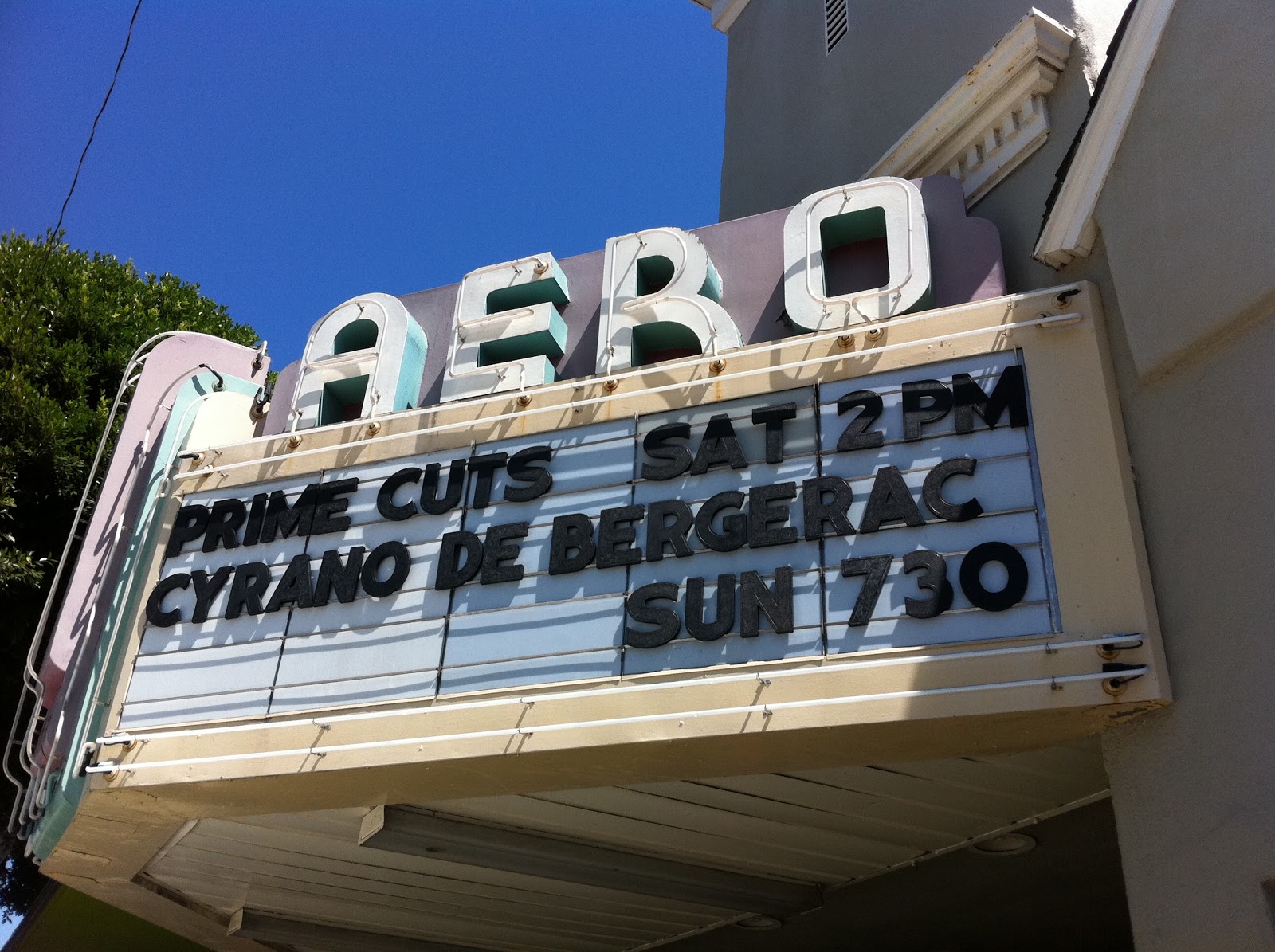
5th Annual Prime Cuts Panel
SR: "20 or 30 years ago, TV was looked down upon in relation to film. And you know a lot of shows in the last ten, fifteen years have kind of changed that perception. Now [the] reality [television genre] feels a little bit like the thing that gets looked down upon in comparison to some of the other genres, and yet it's extraordinarily popular as a genre. As someone working on the inside of it, in your mind, does it deserve to be considered as an artistic form with some of these other genres on tv? And do you see that perception hardening or changing?
MB: "It's always been a perception that I don't understand. To do a show like The Amazing Race or a show like Survivor, the higher-end reality shows I would call them, you have to have a tremendous tool set to do it well. The problem with reality is there's so much of it and it's really sort of gone down the slant. It's really about making money in a lot of senses and it's become throwaway or just so built on sensationalism that you've gotta pick and choose what you're gonna work on or you're gonna find yourself being miserable, at least in my opinion.
"Do I feel 'less than' as a reality editor? Not at all. I feel like I can cut anything, any day of the week. And I feel reality--a show like The Amazing Race is probably the hardest show to cut on television. Comparatively, I've worked on a lot of other shows; they're difficult but, you know, the thing about a show like ours is, yeah, it's a game and there's an elimination each week or there's whatever, there's parts of the game, but it's not in a studio, it's never shot the same way. When you sit down to start an episode, you have no idea what you're getting, you don't know how it was shot, they don't know how--I mean, they plan it as they go. So, it's a real challenge. So I don't think that--to answer your question, some of the reality, yeah, it's pretty on the low end, I would call it, you know, but--
SR: "I didn't mean to be prejorative, by the way! I'm asking your opinion and you gave a great answer."
MB: "No, no!"
SR: "It sounds like you consider it to be a great training ground either to do more and better reality or to do some of these other genres."
MB: "Yeah. I mean, I've seen a lot of great scripted editors fail tremendously on a show like The Amazing Race, because it is a different sort of a thing, you know? So to me, here's the thing about editing, I always think editing is editing. If you can do it, like you get it, it's all storytelling. It's really just what genre you end up doing. When I moved out to LA it was like, 'Oh, you better pick what you want to do because if you're gonna be a drama editor, you can only cut drama and how dare you think that you can cut comedy?' or 'you have to do scripted or only reality.' The lines, with technology, have blurred. You still run into the whole idea of executives at networks or executives on different shows being like, 'Oh, that guy's never cut this or that, so he clearly couldn't do it,' but I think that's a big misnomer. I think that many reality editors would make great scripted editors, and vice versa. But I do think--I know a lot of scripted editors and feature editors, very, very successful ones, and they've said to me, 'That show, I wouldn't want any part of that because it just seems overwhelming at times.' So, you know, that's sort of my answer on that."
SR: "That's a great answer."
I agree that was a great answer, I was happy that the subject was brought up because there is definitely an unfair stigma towards reality television as being somehow less valid than scripted. Personally, I would actually take it further and say that reality television is definitely an editor's medium and we can go places creatively that scripted editors could never dream of. Largely because we have a lot more control over the material. And given the amount of footage we start with and the timetables we operate on, with no scripts to guide, often no logs or transcripts even, I believe that reality editors are faster, better critical and creative problem solvers than any other genre.
Subscribe to:
Posts (Atom)